The bubble is the most strategically asymmetric phase of any multi-table tournament. Every stack is playing a different game. A short stack and a chip leader sitting at the same table have almost nothing in common in terms of their objectives, their ranges, or how they should be thinking about each hand. Understanding what role each stack is playing, and what the other stacks are doing, is what separates players who consistently profit from the bubble from those who treat it as a coin flip.
The Core Principle: Money Matters More Than Chips Here
Before getting into stack-specific strategy, one principle applies to every seat at the table during bubble play. The difference between cashing and bubbling is at minimum 1.5x the buy-in and often far more, depending on the payout structure. Busting one spot before the money is not a bad beat. It is a genuine financial mistake. Every decision during this phase needs to account for that gap.
This is also why ICM pressure is at its most distorting during bubble play. Chips do not equal money on the bubble. They never do, but the distortion is largest here.
Short Stack: Get the Cash, Then Win the Tournament
When we are short on the bubble, the objective is singular: get the min cash. Do not worry about chip EV. Do not worry about winning the tournament right now. The tournament can be won later from a short stack once we are in the money. It cannot be won at all if we bubble.
Pass on marginal shoves. This is the single most important adjustment for a short stack on the bubble. A shove that is slightly positive in pure chip EV terms is often a fold under ICM pressure. The chips gained by getting through a marginal shove do not compensate for what we lose by busting the tournament one spot from the money. Unless a shove is clearly plus EV with significant margin, the default is to fold and wait.
Defend much tighter. From the big blind, we often get a reasonable price to call and try to connect with the board. On the bubble, that logic breaks down. Playing a post-flop pot on the bubble, potentially for our stack, is exactly the kind of marginal spot we need to avoid. Tighten big blind defences significantly, even against what looks like a reasonable price.
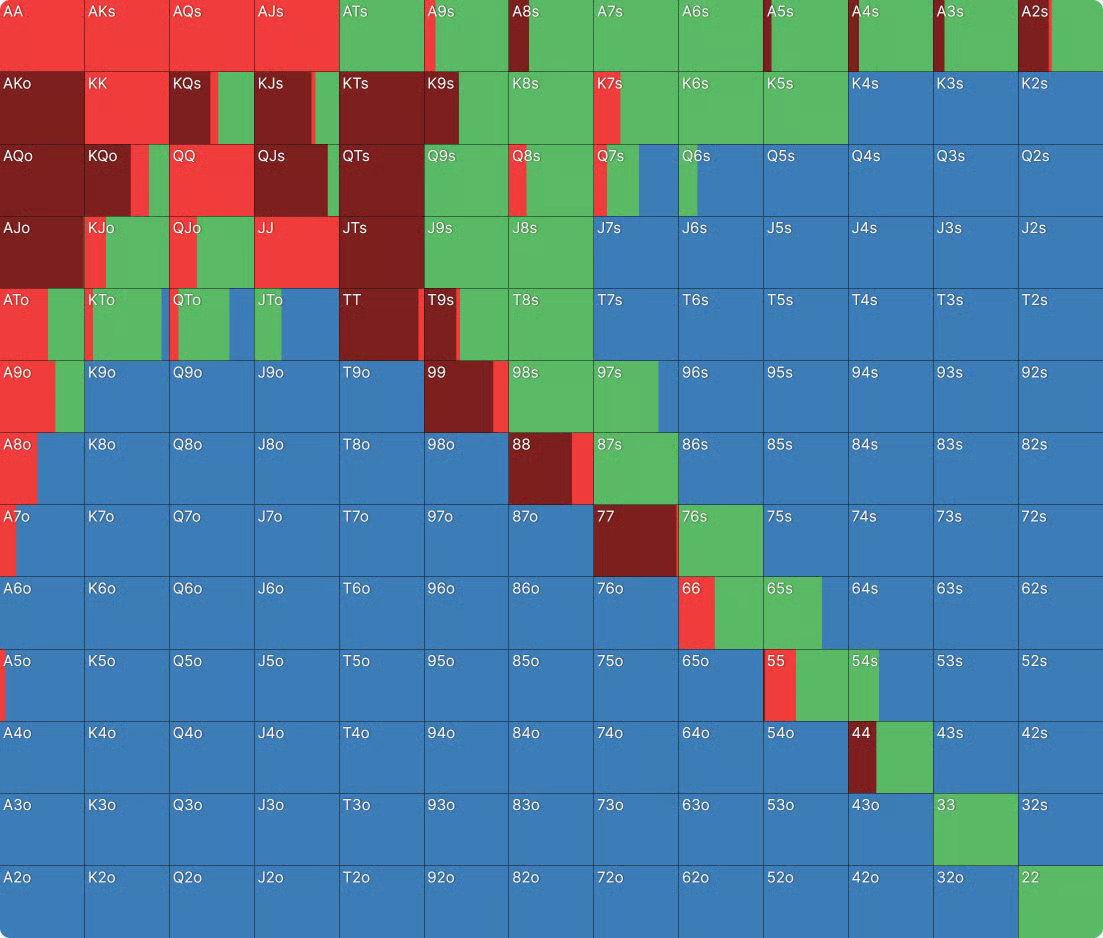
SB vs HJ defense range: Chip EV baseline.
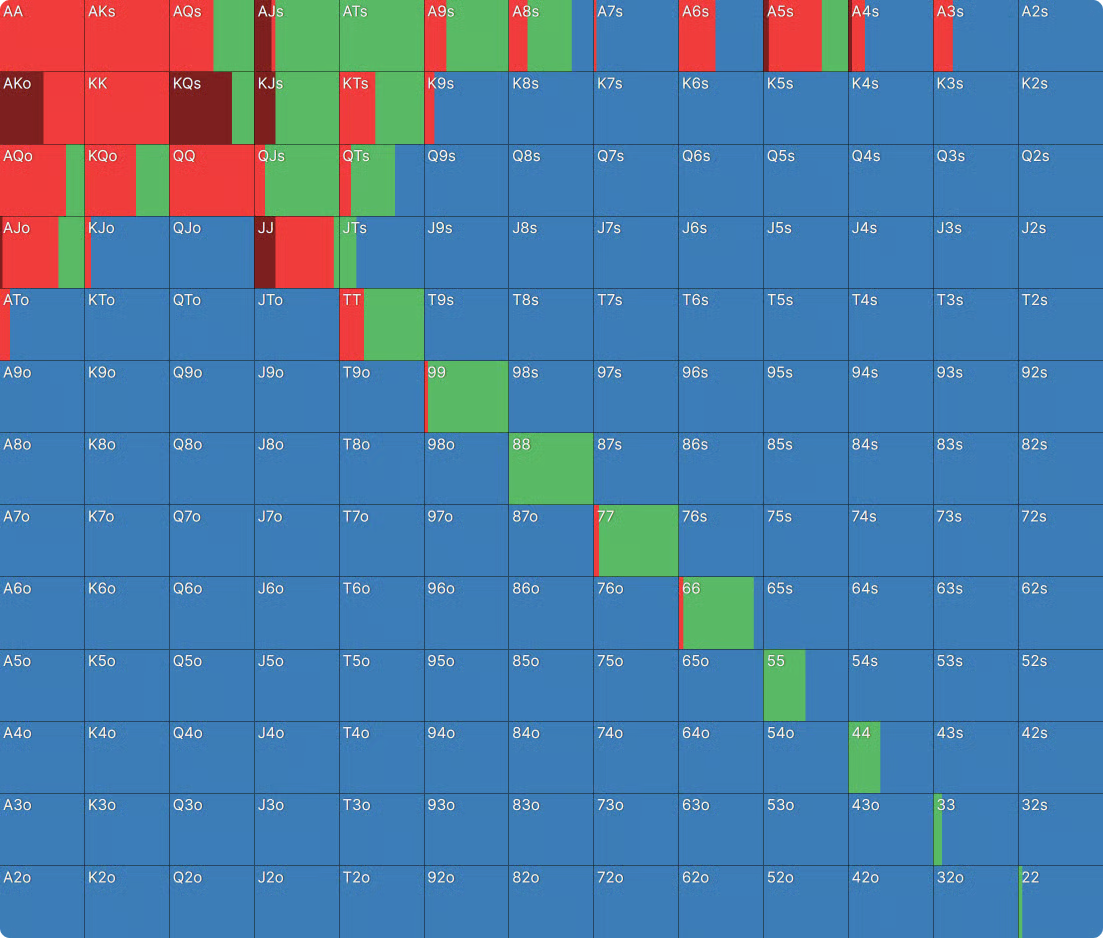
SB vs HJ defense range: ICM near the bubble.
Target other short stacks. When we do shove, the best target is another short stack. They have every incentive to fold all but their very best hands because they face the same ICM pressure we do. Shoving into a medium stack who is also trying to survive is far more profitable than shoving into the chip leader who can call comfortably.
If extremely short on the exact bubble, consider blinding out. This sounds counterintuitive, but it is correct in many spots. With 5 to 6bb remaining and sitting on the exact bubble or one off it, the equity gained from a successful shove (picking up the blinds and antes) does not compensate for the risk of busting. We might be able to blind down to 3 or 4bb and still cash if another short stack busts first. This is a live tournament consideration where stalling at other tables makes the blind-out strategy even more viable.
The basic rule: if it is close, fold. Not a close fold, not deliberating, not finding a reason to convince ourselves. If we genuinely cannot determine whether a shove or call is correct, that is the answer.
Medium Stack: Read the Table Before Opening
Medium stack bubble play is more nuanced than either extreme because the correct strategy depends almost entirely on who is sitting behind us.
Against an aggressive or competent big stack in position: play a tight, solid range. Do not open hands we are not comfortable 4-bet folding or 4-bet shoving over a 3-bet. If we open A♣5♣ from the HJ and the BTN (who has 3x our stack) 3-bets us, we are in an extremely uncomfortable spot. We cannot call comfortably on the bubble, we cannot shove without being very confident we are ahead of their 3-bet range, and we cannot fold without giving up significant equity. The answer is to not be in that spot: tighten our opening range when a competent big stack has position on us.
Against a passive or card-dependent big stack: open much wider. If the BTN only 3-bets their genuine strong hands and otherwise folds, we can open a very wide range because we are essentially only playing against the blinds. Short stacks behind us are folding almost everything. The big stack is not going to punish us. This is a highly profitable spot that many medium stacks miss because they default to tight regardless of what the big stack is actually doing.
The critical question before every open: what is the realistic range of responses from every player behind me, and can I handle all of them?
Defend tighter versus covering stacks. Marginal big blind defences that would be standard in other phases of the tournament become traps on the bubble. Calling with 8♥6♥ out of the big blind might be correct by chip EV, but then we are playing a post-flop pot on the bubble, potentially in a spot where two or three bets go in and we are suddenly facing a decision for our tournament life. These spots are best avoided. Tighten defences, especially against stacks that cover us.
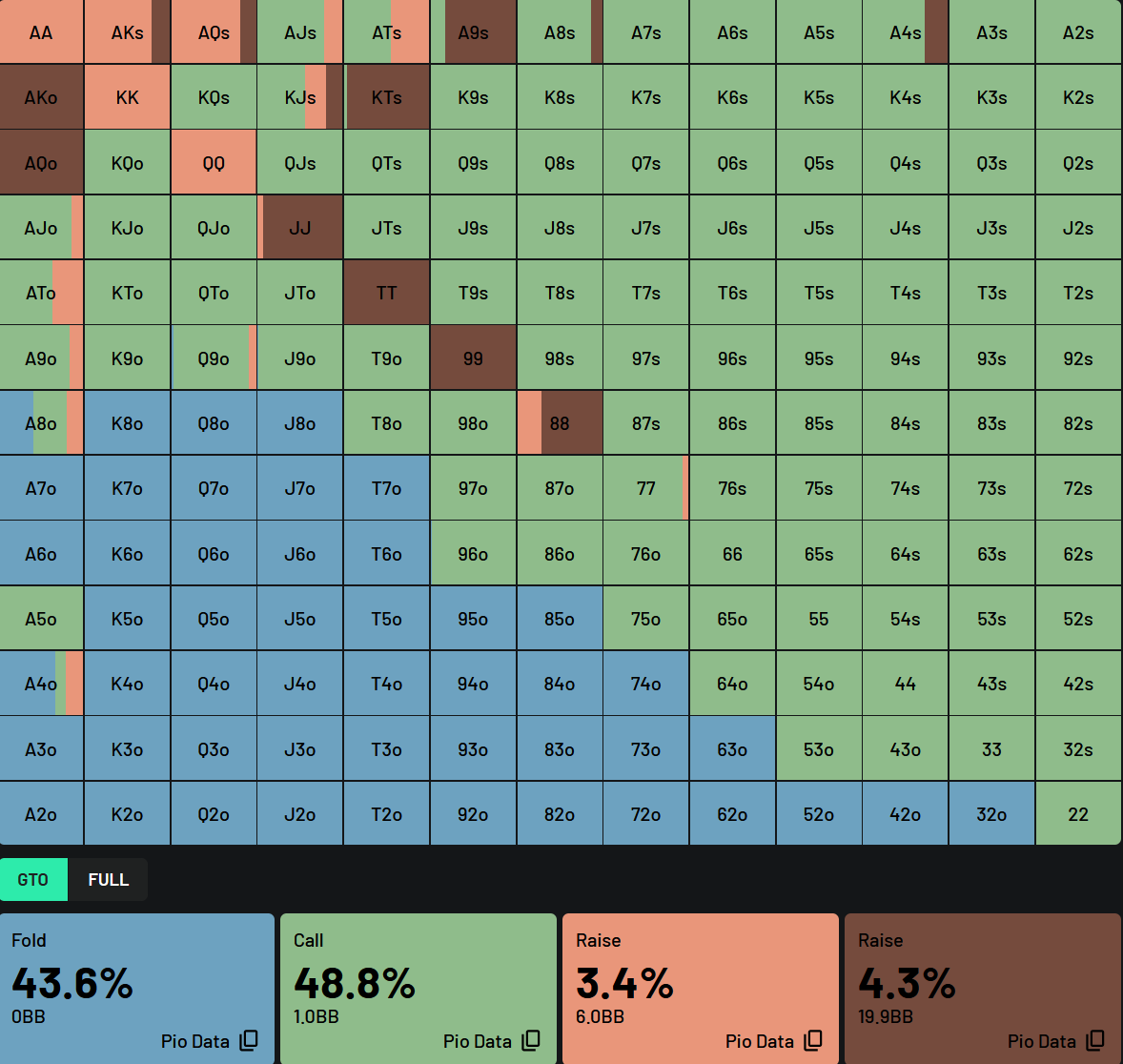
BB vs HJ Def Range 20bb eff: Chip EV baseline.
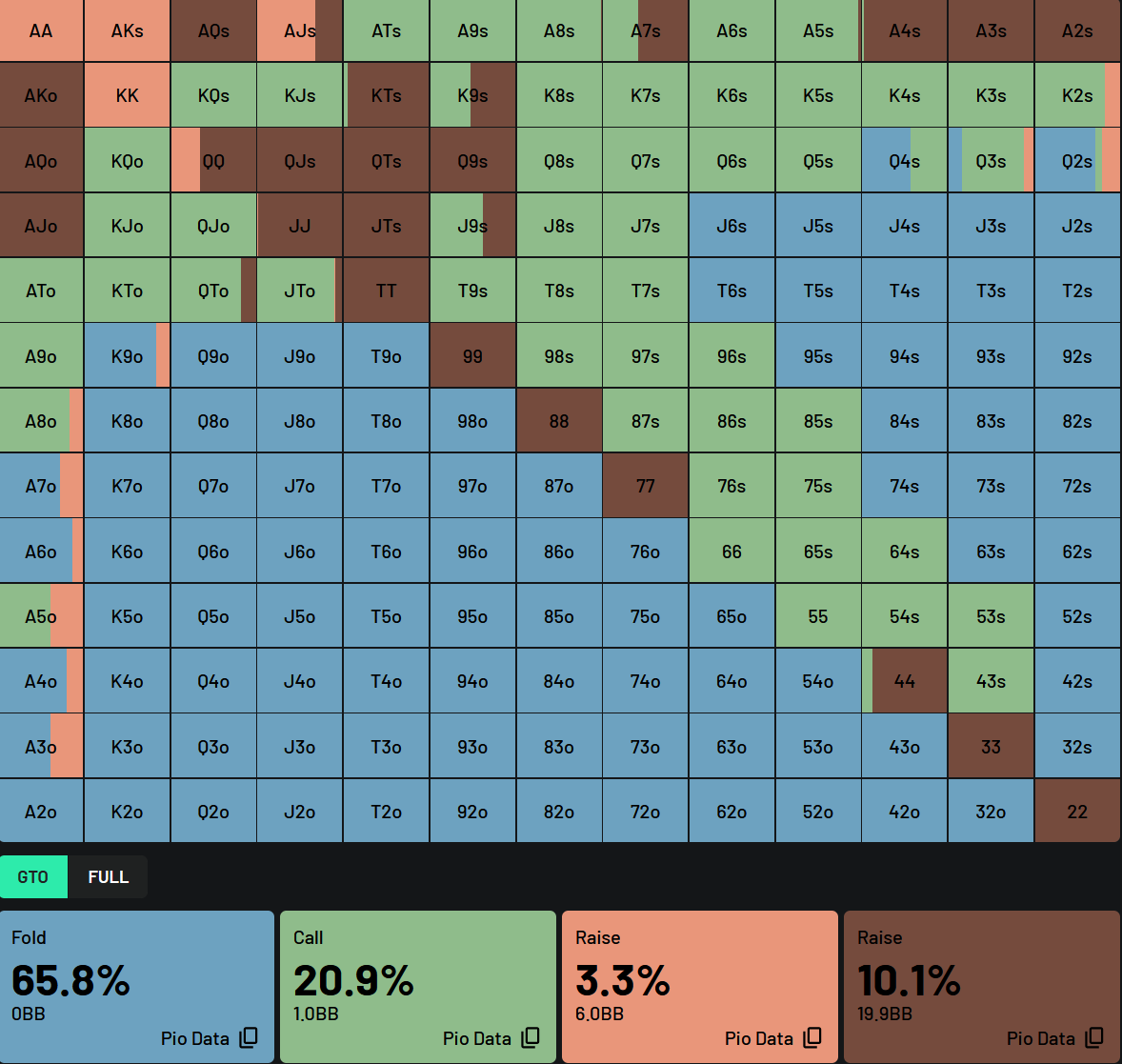
BB vs HJ Def Range 20bb eff: ICM near the bubble vs covering stack.
Big Stack: Print Chips and Set Up for the Money
As the chip leader or one of the larger stacks at the table, the bubble phase is the most profitable period of the entire tournament. Everyone below us is constrained by ICM pressure. We are not. That asymmetry is worth exploiting aggressively.
Min-raise constantly. The default open for a big stack on the bubble is the minimum raise. Everyone at the table will know what we are doing. It does not matter. What can they actually do about it? A medium stack who wants to fight back needs to 3-bet for a large portion of their stack or shove. Short stacks can shove, but they are folding almost everything because they are trying to survive. The min-raise costs us very little to run and the fold equity we pick up hand after hand adds up to a significant chip accumulation over a bubble period that can last 30 to 45 minutes live.
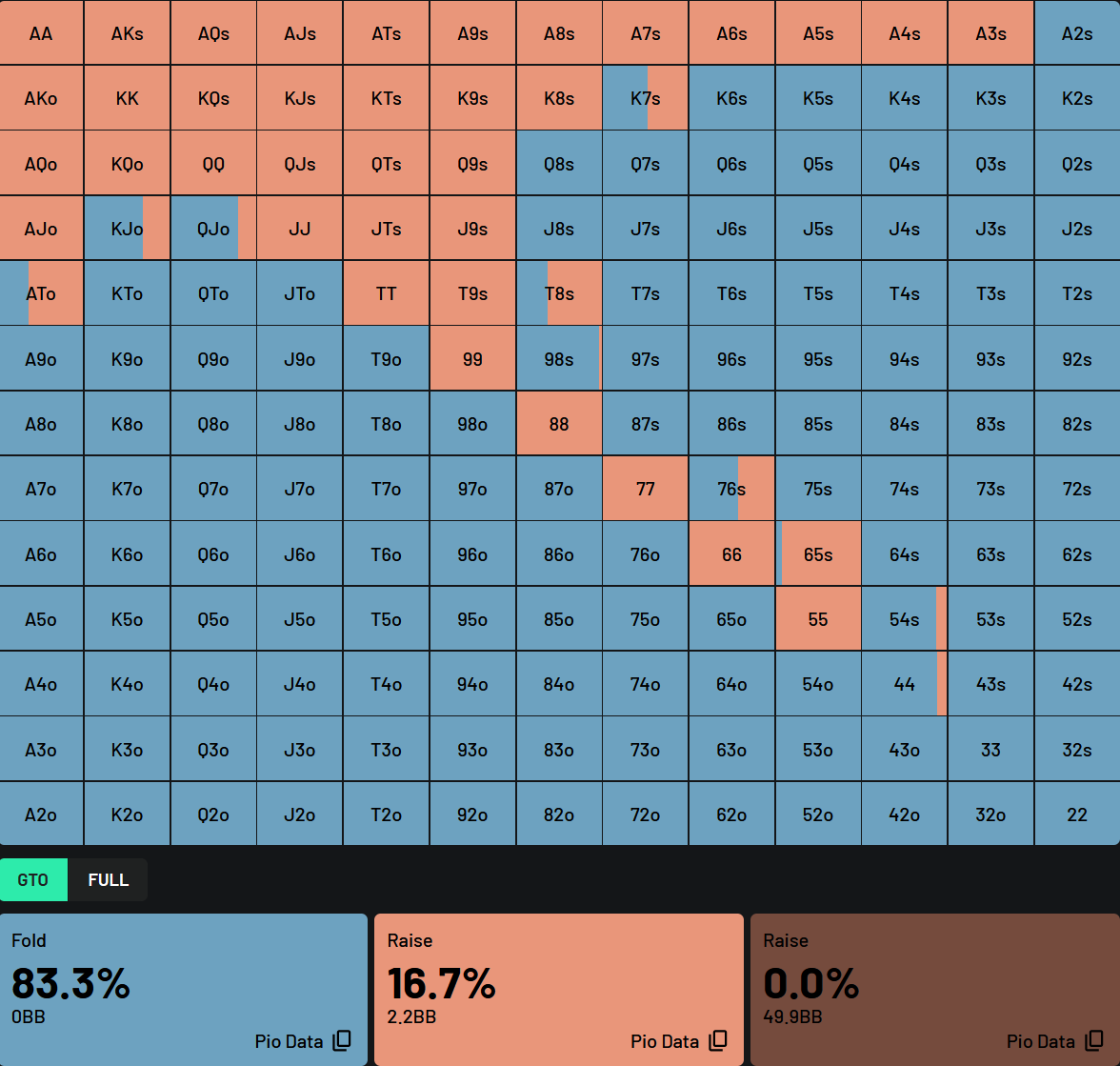
UTG Open Range 50bb eff: Chip EV baseline.
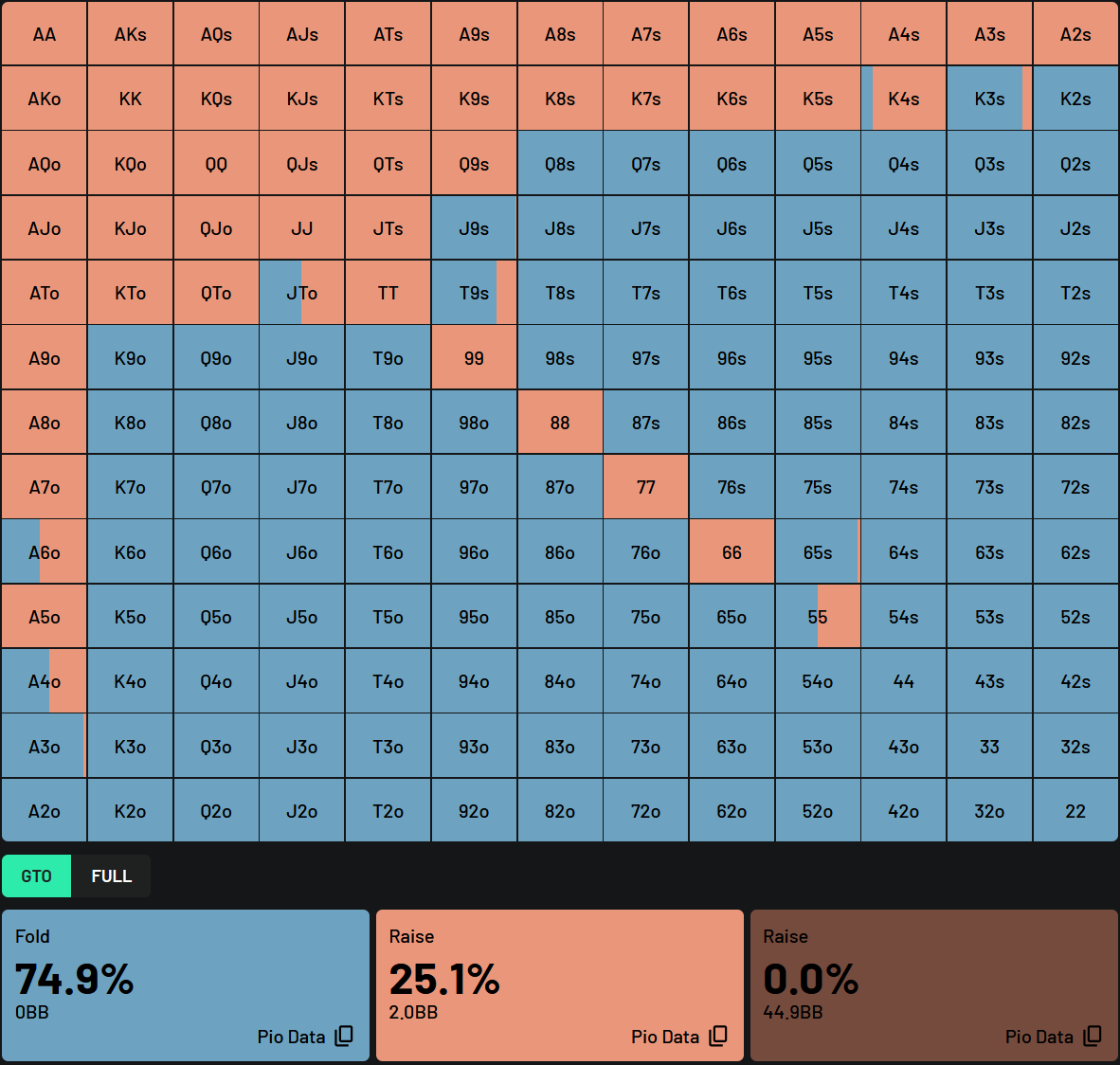
UTG Open Range 50bb eff: ICM near the bubble as big stack.
3-bet medium stacks who open too wide relentlessly. Some medium stacks understand they should be tight on the bubble but still open wider than their ICM situation permits. This is highly exploitable. A 30bb medium stack who opens from the CO with A♣5♥ against our 100bb stack is making a mistake. We can 3-bet them with virtually any two cards. What can they do?
- Folding is likely, because most hands in their range cannot call profitably
- Calling sets them up to play a post-flop pot on the bubble where they have massive ICM pressure on every street
- Shoving requires them to be in the very narrow range of hands that are comfortable shoving over a 3-bet
The medium stack opened too wide and they have almost no good options. If they are doing this repeatedly, we 3-bet them repeatedly. They will eventually have to tighten up, or they will keep giving us chips.
Keep the bubble going. As the big stack, every extra hand on the bubble is another opportunity to open and pick up chips. When we open and a short stack shoves, we are not obligated to call just because we opened. If we have a genuinely weak hand in a spot where the short stack's shoving range is reasonable, folding is fine. We do not need to call their shove with 7♣2♥ because we already put in a raise. Keep the bubble alive, keep opening, keep accumulating.
Post-Bubble Adjustment
One thing to prepare for: the period immediately after the money bubble bursts is not the time to continue opening at the same rate. Two things change simultaneously.
First, players who were folding everything because they were trying to cash are now in the money and will reshove aggressively on any reasonable open. Second, the table fills up with short stacks who have bled down through the bubble and are now in push-or-fold territory. Opens that sailed through on the bubble now get jammed on more frequently.
In live tournaments this transition period can last 30 to 45 minutes while the remaining short stacks bust out. In that window, tighten up slightly, wait for hands, and let the chaos resolve. Once the field has thinned and stacks have redistributed, return to playing aggressively.
Stack-by-Stack Summary
| Stack | Opening | Defending | Key Adjustment |
|---|---|---|---|
| Short (under 12bb) | Shove only very clear spots, target other short stacks | Blind out on exact bubble if extremely short | If it is close, fold |
| Medium (15-35bb) | Tight vs active big stacks, wider vs passive big stacks | Tighter than normal vs covering stacks | Read who is behind you before every open |
| Big stack (covering most) | Min-raise constantly, 3-bet medium stacks liberally | Less ICM constraint, near chip EV | Tighten slightly after bubble bursts |
Key Takeaways
-
Short stacks on the bubble have one job: cash. Pass on marginal shoves, defend tighter, and if extremely short on the exact bubble consider blinding out rather than risking a bust before the money. If it is close, fold.
-
Medium stack strategy depends entirely on who is sitting behind you. Against a passive big stack, open wide. Against an aggressive big stack, play tight and only open hands you can comfortably continue with. Read the table before every single open.
-
Big stacks should min-raise relentlessly and 3-bet medium stacks who open too wide. The bubble is the most profitable phase of the tournament for a chip leader. Use it. Then tighten slightly after the money bursts while short stacks bust out.

Written by
PokerTournaments101
25 years playing mid-to-high stakes NLH and PLO across live and online. Poker industry veterans turned tournament grinders, tool builders, and writers.